
SportHack
Open Innovation
Challenge
SportHack required a dynamic open innovation program to uncover novel, technology-driven solutions within the sports industry. The objective was to bring together diverse international talent to prototype and develop innovative sports technology concepts, fostering both professional advancement and broader societal well-being.
Solution
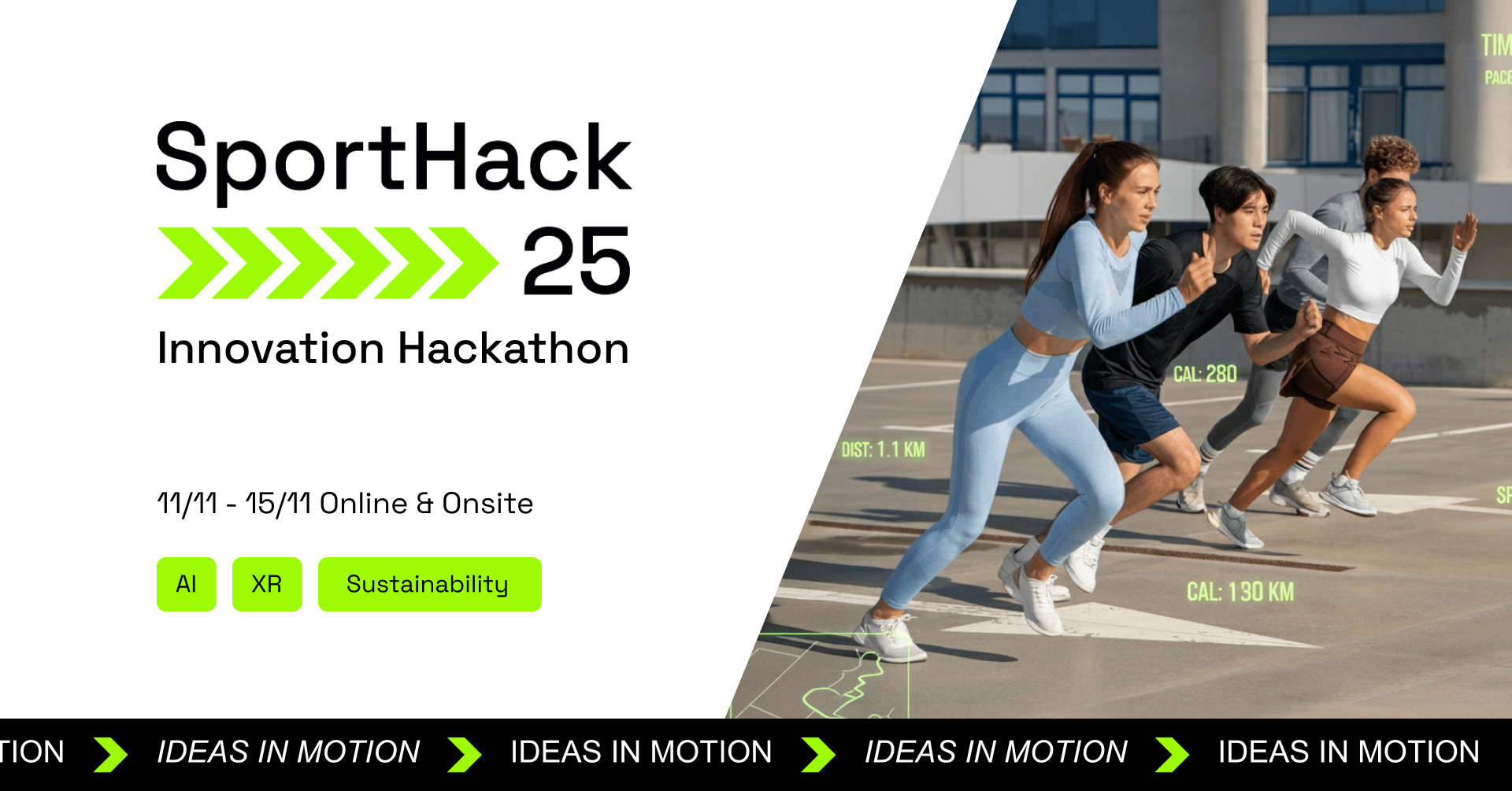
HackTribe designed and executed SportHack 2025, an international hybrid hackathon, bringing together 137 participants from over 20 countries. This program facilitated the rapid development of 24 sportstech solutions, guided by 44 international experts and culminating in a robust evaluation by a distinguished jury.
Results
""This year's hackathon vividly demonstrated how technology can improve the sports experience for everyone. We managed to discover solutions that both help improve professional performance and encourage people to be active in their daily lives.""
Driving Sports Innovation Globally
In a rapidly evolving technological landscape, the sports industry constantly seeks innovative solutions to enhance performance, improve athlete well-being, and broaden participation. SportHack 2025, an international open innovation hackathon, was established to address this need by creating a platform for sportstech enthusiasts worldwide to collaborate, prototype, and refine groundbreaking ideas.
HackTribe designed and implemented SportHack 2025 as a hybrid event, combining online participation with an in-person hub at Rīga Stradiņš University. This approach maximized accessibility, drawing 137 participants from over 20 countries. The hackathon's structured environment, supported by a diverse team of 44 international experts, fostered rapid development and iteration. Over five intensive days, 24 teams worked to transform their concepts into tangible prototypes, culminating in presentations to a distinguished jury comprising industry leaders and academic specialists.
Breakthrough Innovations from the Hackathon
The hackathon showcased a remarkable array of solutions, demonstrating the power of interdisciplinary collaboration and advanced technology. The top three teams, all recognized for their innovative applications of AI and sensor technology, represented a significant leap forward in sports performance and recovery.
SmartMove (Lithuania): The winning team developed a sensor-equipped suit that captures real-time movement data. Using AI, the suit identifies unsafe or inefficient sports techniques, providing immediate haptic feedback and explanatory recommendations. Their prototype, built during the hackathon, utilized flexible strain sensors for direct training analysis, delivering gesture recognition, movement efficiency evaluation, and an online dashboard for coaches to monitor performance without bulky hardware. SmartMove received a 1,000 euro cash prize and 3,000 euros worth of coworking space.
TAKA apzinātība (Latvia): Taking second place, this team created an AI-powered platform that aggregates Heart Rate Variability (HRV) data from various smart devices. It converts this data into personalized, scientifically grounded recommendations to help athletes understand their physiological state, manage overload, prevent burnout, and improve sleep through targeted breathing and mindfulness exercises. They were awarded a 500 euro cash prize.
AI Lactate Zone and Recovery Advisor (Latvia): The third-place team offered a tool that interprets data from smart devices to predict real-time lactate changes. This enables athletes to understand their fatigue and recovery levels, helping them avoid overtraining and optimize their training intensity. This team secured a 300 euro cash prize.
Recognizing Diverse Contributions and Future Potential
Beyond the top three, several teams received special recognition from hackathon partners, underscoring the broad impact and commercial viability of the ideas generated.
Decathlon awarded its prize to "Walky Doggy," a mobile application that incentivizes walking by converting daily step counts into discounts at local businesses. The Latvian Olympic Committee recognized "Smart Recover," an application designed for students and athletes to prevent overtraining by aggregating data on training, sleep, stress, and daily life.
Tele2's special award went to "Shapes of Latvia," who are developing a safe and durable electric mobility vehicle and platform. This solution aims to enable seniors and individuals with mobility impairments to explore nature trails and remote destinations. The City of Liepāja also honored "Walky Doggy" and "SwimVision," an AI-powered tool for swimming technique analysis that provides fast, objective feedback from video without the need for sensors.
“During the hackathon, we managed to discover solutions that both help improve professional performance and encourage people to be active in their daily lives. This proves that technology in sports is not just for medals, but also for building a healthier and more active society overall.”
Kārlis Skuja, Organizer, SportHack 2025 and Head of Innovation Community, WindHackers
The success of SportHack 2025 highlights HackTribe's expertise in designing and executing impactful open innovation programs. By connecting diverse talent with expert mentorship and practical resources, HackTribe empowers organizations to uncover, develop, and accelerate the adoption of cutting-edge technological solutions within their industries.
The event concluded with a strong message about the transformative potential of technology in sports, showcasing how innovative ideas can enhance professional performance and contribute to a healthier, more active global society.